
Katherine H. Judson, Chair
Center for Integrity in Forensic Science · Madison, WI
Co-produced with the Center for Integrity in Forensic Sciences (CIFS)
Forensic evidence can be persuasive, but sometimes the certainty projected in the courtroom exceeds what science truly supports. A conclusion delivered too confidently, a probability presented without context, or a detail interpreted too narrowly can influence how the judge and jury understand a case. Even when unintentional, these moments can significantly alter decisions, leading to profound consequences for the accused. Attorneys who can distinguish between supported and unsupported scientific claims are better positioned to keep the record grounded in reliable evidence and achieve more just outcomes.
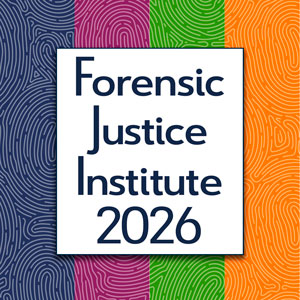
The Forensic Justice Institute 2026 gives you the knowledge to do exactly that. This one-day program brings together renowned forensic specialists and criminal law practitioners to help you analyze, question, and apply scientific evidence with clarity and precision, not bias.
Co-produced with the Center for Integrity in Forensic Sciences (CIFS)
Forensic evidence can be persuasive, but sometimes the certainty projected in the courtroom exceeds what science truly supports. A conclusion delivered too confidently, a probability presented without context, or a detail interpreted too narrowly can influence how the judge and jury understand a case. Even when unintentional, these moments can significantly alter decisions, leading to profound consequences for the accused. Attorneys who can distinguish between supported and unsupported scientific claims are better positioned to keep the record grounded in reliable evidence and achieve more just outcomes.
The Forensic Justice Institute 2026 gives you the knowledge to do exactly that. This one-day program brings together renowned forensic specialists and criminal law practitioners to help you analyze, question, and apply scientific evidence with clarity and precision, not bias.
Gain practical tools to evaluate forensic methods, interpret scientific claims, and understand the evidentiary weight of key forensic disciplines. You’ll explore how to:
Together, these sessions help you turn scientific insight into stronger advocacy—whether you’re preparing for cross examination, challenging admissibility, or explaining complex findings to a jury.
You’ll leave with sharper questions, clearer strategies, and a deeper understanding of what the science behind the evidence can—and cannot—support. Ensure that reliable science guides your advocacy and reinforces the integrity of your work with the Forensic Justice Institute 2026.
Katherine H. Judson
Erin Nagy
Stephen Hanko, Jeffrey J. Peterson
Dr. Lindsey C. Thomas
Janis C. Puracal
Katherine H. Judson
Dr. Claudia Solís-Lemus
Emily J. Prokesch
The Wisconsin Rules of Evidence: A Courtroom Handbook
Save 15% on The Wisconsin Rules of Evidence: A Courtroom Handbook.* This must-have courtroom companion puts the rules of evidence at your command during trial. Use discount code IN0237 when you order online or by calling (800) 728-7788.
*Discount applies to both print and digital Books Unbound editions of this title and cannot be applied to previous purchases. Offer valid through 12/31/27. For Books Unbound users, discount may be applied to purchase of individual Books Unbound title only and may not be used on the purchase of libraries. Discount cannot be combined with any other offers.
| The Center for Integrity in Forensic Sciences (CIFS) is the first non-profit in the U.S. to bring exclusive focus to improvement of the reliability and safety of criminal prosecutions by strengthening the forensic sciences. Its goals span legislation, all facets of the judicial system, and experiential education of tomorrow’s lawyers and scientists. |